Winter Light: Designing For Darkness
Four o'clock on a November afternoon and darkness arrives not gradually but decisively. One moment the sitting room holds the last grey light filtering through south-facing windows. The next, night has claimed the space, pressing against glass, erasing the garden beyond.
She doesn't reach for the overhead switch.
Instead, a match strikes. The first candle catches on the mantelpiece. Then another on the side table. A third on the bookshelf. Within minutes, the room exists in pools of warm light separated by comfortable shadow. The ceiling disappears. The corners recede. The space contracts around illuminated zones where life happens: the armchair with its reading lamp, the sofa with its scatter of cushions catching flame-light, the low table where candles cluster.
Not dim lighting. Designed darkness.
The question winter poses to northern dwellers isn't how to fight the dark but how to inhabit it. For months, daylight becomes scarce luxury, darkness the prevailing condition. Contemporary interiors often resist this reality, maintaining summer brightness year-round through overhead lighting that flattens space and exhausts inhabitants. But older traditions, particularly across Scandinavia and Scotland's northern reaches, developed sophisticated responses to winter's demands.
They designed for darkness rather than against it.
What happens when we stop treating winter as lighting problem requiring solution and recognize it instead as invitation to different spatial logic? When we allow darkness to shape how rooms function, how households gather, how rest becomes possible?
Scandinavian Light Philosophy
Hygge and lagom both respond to winter darkness through intentional spatial warmth.
The Danish concept of hygge (roughly: cosy intimacy) and Swedish lagom (balanced sufficiency) emerged from cultures experiencing four to six hours of daylight at winter's depth. These aren't merely aesthetic preferences but survival strategies, ways of making psychological peace with months when sun barely rises.
Pre-electric Scandinavia designed interiors around candle, oil lamp, and hearth fire as primary illumination. White walls maximized light reflection. Mirrors positioned strategically to double perceived brightness. South-facing windows privileged over all other orientations. Every architectural decision acknowledged light scarcity as fundamental constraint.
The contemporary application isn't replicating nineteenth-century lighting levels but understanding the principle: multiple small light sources create more liveable winter spaces than single overhead fixtures. Warm colour temperatures (2200K to 2700K, the spectrum of candle flame rather than noon sun) support rather than disrupt circadian rhythms. Dimmable everything allows adjustment as darkness deepens. Task lighting layered with ambient glow creates islands of activity within larger shadow.
Research into Seasonal Affective Disorder suggests correlation between light quality and winter wellbeing. Studies indicate blue-spectrum LEDs (5000K and above) may affect melatonin production. Northern cultures intuitively favoured warmer light sources long before research explored these connections. The brightness isn't wrong precisely, but the spectrum is. Winter benefits from amber glow rather than clinical white.
Scandinavian interiors layer lighting at multiple heights. Floor lamps, table lamps, wall sconces, candles. Each source handles different function whilst contributing to overall atmosphere. The effect is democratic: no single light dominates, no hierarchy of brightness, just sufficient illumination distributed throughout space at human scale rather than imposed from ceiling.
 (Architectural response to winter light scarcity. Floor-to-ceiling glazing maximises southern exposure, capturing low-arc sun during brief daylight hours. Window as primary design element rather than aperture.)
Candlelight as Architecture
Flame possesses material properties that electric sources cannot replicate.
A candle flickers at roughly 10 hertz, the frequency that draws and holds human attention without causing fatigue. The warm spectrum (approximately 1800K) triggers evolutionary responses to fire, that primal comfort predating language. The directional nature of flame creates shadows with depth, revealing spatial volume that flat overhead lighting erases. Movement holds visual interest, preventing the deadening effect of static illumination.
Medieval great halls positioned candles deliberately, placement determining seating hierarchy and social order. Georgian candlestick design involved height calculations ensuring optimal illumination zones. Victorian wall sconces directed flame upward, bouncing light off ceilings whilst protecting wall coverings from soot. Religious architecture understood collective glow: votive candles creating atmosphere through accumulated small flames rather than dramatic single sources.
The strategy translates directly to contemporary interiors.
Clustering works better than scattering. Three to five candles grouped create substantial light pool. Single candles dispersed across room produce visual confusion, eyes struggling to adjust between isolated bright points and surrounding darkness. Height variation matters: floor level, table height, mantel placement create layered illumination engaging the full vertical space.
Glass hurricanes serve dual function. They protect flame from drafts whilst magnifying apparent brightness, the glass acting as lens concentrating light. Mirror backing doubles effect. A cluster of three candles before mirror reads as six, the reflected flames creating depth whilst increasing functional light output.
For dining, the calculation is straightforward: one candle per two diners, flame at eye level when seated. Higher and the light skims over faces, failing to illuminate. Lower and it blinds, creating harsh upward shadows. The specific height depends on table surface and chair seat, but the principle holds: candlelight should illuminate faces whilst remaining comfortable to look past.
Safety requires consideration. LED candles suit unattended spaces or homes with young children. Real flame belongs in occupied rooms where attention can monitor it. Stable bases. Positions away from drafts and textiles. Snuffer tools rather than blowing, which spatters wax and risks spreading embers.
The biophilic dimension matters more than safety considerations suggest. Fire represents primal human comfort, the evolutionary anchor around which social structures developed. Gathering around flame triggers responses that screens, however sophisticated, cannot satisfy. The body recognizes fire in ways electric light doesn't register. Winter darkness calls for this recognition.
 (Flame possesses material properties electric sources cannot replicate. Approximately 1800K colour temperature triggers evolutionary responses to fire. Directional light creates shadows revealing spatial volume that overhead fixtures erase.)
Darkness as Design Element
Contemporary interiors suffer from over lighting.
Hospital corridors and office floors require bright, even illumination. Safety. Productivity. Clinical clarity. But homes aren't hospitals. The domestic realm benefits from variation, from darkness enabling rest and intimacy that unrelenting brightness interrupts.
The cultural assumption that bright equals clean, that darkness suggests neglect or poverty, damages how we inhabit winter. Darkness offers gifts: it focuses attention on illuminated zones, creates psychological comfort in bounded spaces, enables the melatonin production necessary for quality sleep, and invites contemplation that harsh lighting prevents.
Winter historically prompted spatial contraction. Households closed unused rooms, concentrated activity in fewer spaces heated and lit adequately rather than spreading resources across entire dwellings. Contemporary homes maintain every room at equal brightness regardless of use, an egalitarianism that squanders energy whilst missing winter's invitation to inhabit smaller spaces more deeply.
Creating lit islands within larger darkness produces surprising comfort. A reading chair, properly illuminated, surrounded by shadow feels more secure than the same chair in fully bright room. The bounded quality, the sense of shelter within shelter, answers psychological needs that summer's expansiveness doesn't address.
Colour behaves differently under candlelight than daylight. Deep tones (burgundy, forest green, navy) that seem heavy in bright conditions become rich, absorbing and reflecting flame in ways that create visual warmth. Metallics (brass, copper, bronze) catch and throw light, their surfaces becoming active participants in illumination rather than passive décor. Matte surfaces recede gently. Gloss creates sharp highlights and defined shadows.
Textiles contribute substantially. Velvet's pile catches light directionally, appearing darker or lighter depending on viewing angle, creating visual interest through simple material properties. Wool absorbs light softly. Linen scatters it. The textures become visible in low light in ways that bright, even illumination erases. Layering increases depth. A sofa dressed in throws and cushions creates complex play of light and shadow. A bare sofa in the same lighting reads as flat.
Our textile collection considers how materials perform in winter's reduced light. Handwoven pieces in natural fibres develop visual complexity under candlelight, their irregularities becoming assets rather than imperfections.
Window Treatment for Winter
Managing daylight scarcity requires different approach than summer sun control.
South-facing windows in UK homes receive priority attention during winter months. The low arc sun travels means southern exposure captures maximum available daylight. Sheer curtains during day allow light penetration whilst providing privacy. Heavy curtains drawn at night serve thermal function (reducing heat loss through glass) whilst controlling darkness, preventing that sense of black void pressing against panes.
Window ledges become display space. Objects positioned to catch low winter sun create moments of beauty during brief bright hours. Glass vessels. Ceramics with interesting glazes. Plants tolerating variable light. These aren't mere decoration but strategic use of scarce resource, making daylight perform aesthetic work.
The thermal dimension matters practically. Curtains act as insulation layer, particularly when lined or made from substantial materials. Velvet, wool, lined cotton. The fabric choice affects both thermal performance and how the curtain drapes, how it catches light, how it contributes to room's winter character. Draft exclusion around window frames prevents cold air infiltration that no amount of heating can overcome.
Privacy without brightness becomes possible through layering. Frosted glass, sheer panels, plants on windowsills creating living screen. These approaches maintain daylight access whilst preventing direct sightlines. Contemporary obsession with unobstructed views often sacrifices comfort for principle, leaving inhabitants choosing between exposure and darkness when intermediate solutions exist.
Seasonal Living Through Objects
Winter interiors benefit from rotation rather than year-round sameness.
The concept of seasonal collections, replacing or supplementing permanent pieces with objects answering specific conditions, acknowledges that winter living differs from summer. Not completely different rooms but adjusted spaces responding to changed light, temperature, and psychological needs.
Textiles lead this adjustment. Linen throws in deep winter tones (charcoal, olive, rust) provide actual warmth whilst adding visual weight that summer's lighter fabrics lack. Layering creates both thermal comfort and aesthetic richness. Cushions in velvet or wool replace cotton. The result isn't just warmer but visually appropriate to season.
Botanical presence shifts. Summer's abundant fresh flowers give way to winter-hardy plants (ivy, ferns, succulents requiring less light) and dried arrangements. Honesty seed heads. Eucalyptus branches. Preserved grasses. These aren't inferior substitutes but different expressions of nature's presence, honest about seasonal reality rather than pretending endless summer.
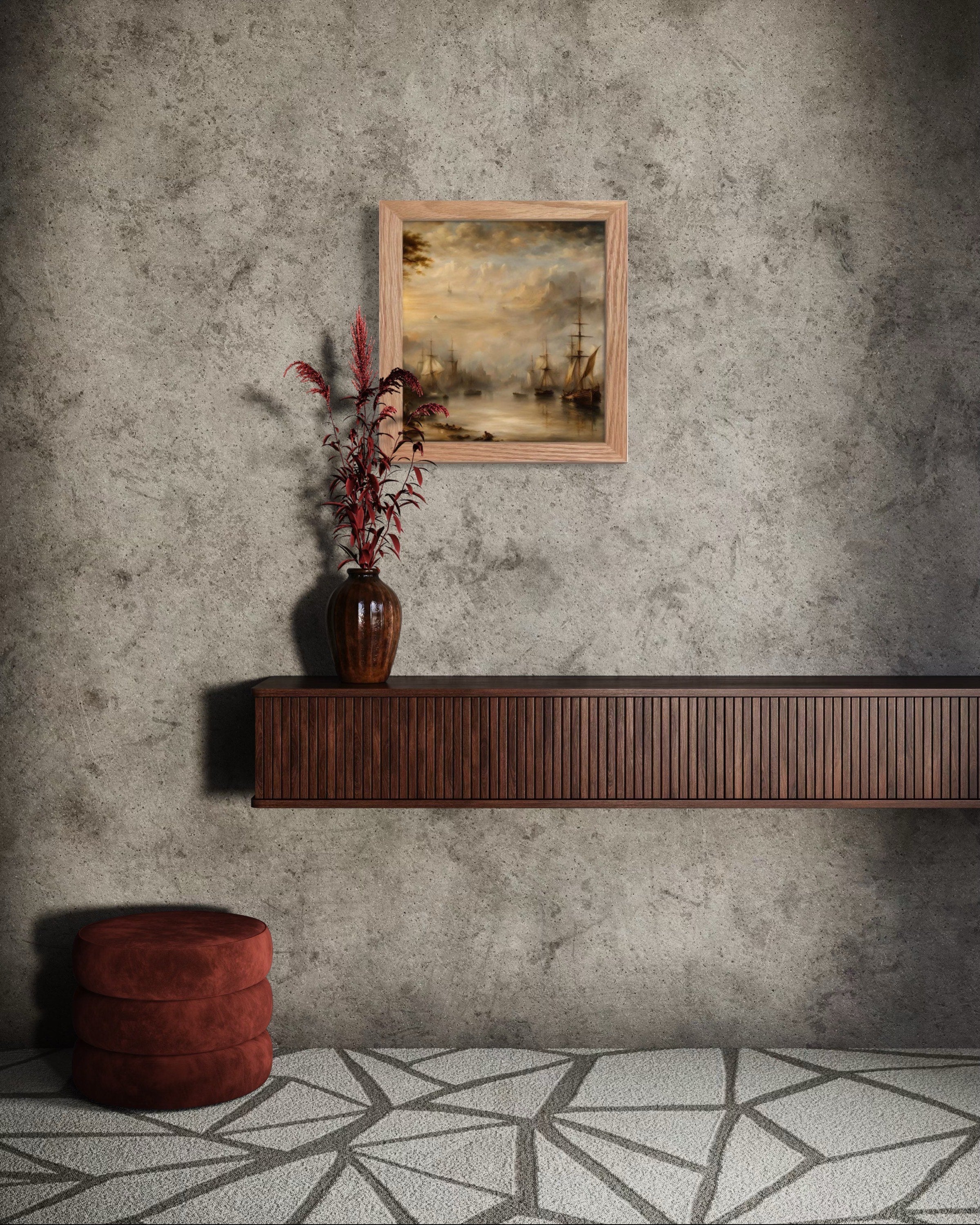
Art rotation responds to light quality. Pieces with darker grounds or more contemplative subjects suit winter viewing. Abstracts that work in multiple light conditions. Prints or paintings that don't require bright illumination to read clearly. The idea isn't removing all colour but selecting works that perform well in candlelight and grey daylight.
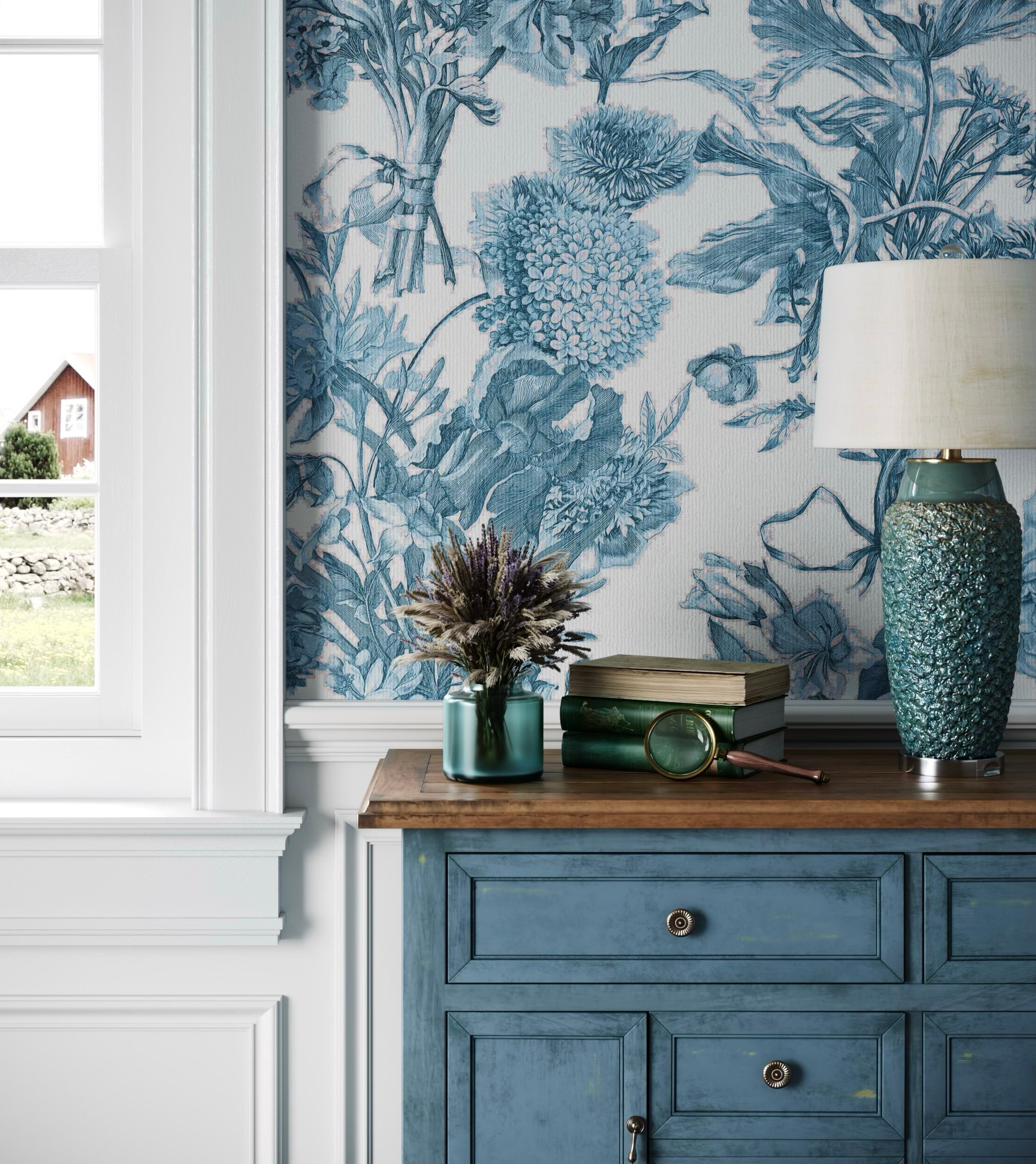
Wallpaper with botanical patterns provides visual richness that low light doesn't diminish. Darker grounds rather than summer pastels. Pattern creating depth when colour is muted by candles. The wall itself becoming interesting in ways that plain surfaces cannot achieve in limited light.
Fragrance contributes substantially to winter atmosphere. Cedarwood, clove, amber. Scents that match season's character. Reed diffusers provide subtle, constant presence. Scented candles double function: illumination and aroma. The olfactory dimension makes spaces feel inhabited, warm, attended to in ways that visual elements alone don't accomplish.
 (Seasonal rituals acknowledging winter's darkness. Multiple small light sources create liveable atmosphere that single bright fixtures cannot achieve. Cultural response to months when daylight becomes scarce luxury.)
Practical Winter Lighting Plan
Room-by-room considerations for designing with darkness.
Living rooms benefit from three to five candle clusters positioned at different heights. Table lamps and floor lamps with warm bulbs supplement. Dimmer switches become essential, allowing adjustment as darkness deepens through evening. Mirror opposite window doubles available daylight, then reflects candlelight at night.
Bedrooms require careful thought. Bedside lamps handle reading. Overhead lighting becomes unnecessary, even detrimental to sleep preparation. Blackout curtains prevent early darkness in summer but become less critical in winter when darkness arrives naturally. Dawn simulators provide gradual light increase option for winter mornings.
Kitchens demand compromise. Task lighting remains necessary for safe food preparation. Pendant lights over tables can be dimmed for dining. Under-cabinet strips illuminate work surfaces without flooding entire space with brightness. The goal is adequate light for function whilst maintaining domestic rather than commercial atmosphere.
Hallways present challenge. Harsh transitions between bright and dark spaces strain eyes and create psychological discomfort. Low-level lighting (at skirting height or floor level) provides navigation whilst avoiding glare. This becomes particularly important for night time movement when adjustment between bedroom darkness and bright hallway can be jarring.
Bathrooms split function. Bright task lighting around mirrors serves practical grooming needs. Ambient candles make bathing ceremony rather than chore. Separate circuits allow choosing appropriate lighting for activity. The Victorian practice of bathroom as spa-like retreat rather than purely functional space deserves revival.
Coda: What Winter Teaches
Four o'clock darkness no longer feels like imposition. The room, properly lit for its purpose, provides exactly what this hour requires. Not the brightness of midday extended artificially into evening but the graduated dimness that evening should bring. Space for reading in lamplight. Space for conversation in candlelight. Space for rest in comfortable shadow.
Contemporary tendency maintains uniform brightness regardless of time, date, or season. Resisting natural cycles rather than working with them. The alternative approach designs spaces responding to actual conditions, acknowledging that winter's darkness enables rest that summer brightness interrupts, that candlelight gathers households in ways overhead fixtures cannot, that some qualities of attention only emerge when illumination focuses rather than floods.
Winter darkness isn't deficit requiring compensation but invitation to different inhabitation. Slower rhythms. Deeper rest. More intimate gatherings. The spatial contraction that cold and darkness encourage creates opportunities that summer's expansiveness doesn't offer. Learning to value these opportunities requires releasing the assumption that more light always improves experience.
The question isn't whether darkness can be made comfortable but whether comfort sometimes requires darkness. Whether spaces designed around seasonal realities serve inhabitants better than those maintaining artificial constancy. Whether winter teaches what brightness cannot: that rest, contemplation, and certain qualities of gathering need shadow more than light.
Some spaces demand darkness. Some light requires flame. Some seasons teach what brightness cannot illuminate.

About This Article
This exploration of winter interior design was researched and written for Sisuverse Journal as part of our ongoing investigation into seasonal living and how light shapes domestic experience. Claims about circadian rhythms and seasonal patterns have been verified through consultation with published research.
Further Reading
- Meik Wiking, The Little Book of Hygge (William Morrow, 2017)
- Pernille Feilberg, The Nordic Guide to Living 10 Years Longer (Penguin Life, 2017)
- V&A Museum, Lighting in Historic Buildings (Conservation Journal, various)
Related Collections
Explore pieces curated for winter inhabitation. Our Loom Collection features textiles in natural fibres that develop character under reduced light. Handwoven pieces creating visual complexity through texture when colour is muted by candles.
External References & Resources
For those interested in seasonal design and lighting research:
- NHS: Seasonal Affective Disorder (nhs.uk) - General information on winter wellbeing
- Design Museum (designmuseum.org) - Scandinavian design principles and historical context
- Sleep Research Society - Circadian rhythm studies and lighting effects
- V&A Museum (vam.ac.uk) - Historic lighting methods and domestic illumination
Photography Credits
All images via Unsplash:
- Nordic interior with natural light: Vladyslav Melnyk
- Scandinavian room with triangular window: Polina Kuzovkova
- Candle on wooden table with winter backdrop: Sixteen Miles Out
- Edinburgh Christmas lights market: Ross Sneddon
- Historic ceiling lamps with stone pillars: Jacky Pun
Specific image attributions available upon request for editorial compliance.
Explore more investigations into seasonal living, biophilic design, and how light shapes domestic space in Sisuverse Journal. Published regularly.