Flowers dissected into geometric segments, each bloom rendered as radial wedges rather than organic curves. Slice reinterprets 1960s and 1970s pattern vocabulary where botanical forms submitted to mathematical division and bold colour blocking.
The design depicts stylized blooms—likely referencing daisies or chrysanthemums—broken into pie-slice segments radiating from circular centres. Each petal receives distinct colour treatment, creating kaleidoscopic effect within individual flowers. The palette varies by colourway but maintains retro sensibility: burnt orange, avocado green, mustard yellow, or more contemporary coral, teal, and charcoal combinations. Flowers repeat in regular grid arrangement, their uniform scale and geometric precision creating rhythmic pattern. The aesthetic recalls mid-century textile design when organic inspiration underwent stylization through industrial production methods and Pop Art influence.
Printed in Cornwall with sharp colour boundaries essential to geometric floral patterns, maintaining crisp wedge edges that define the design's character.
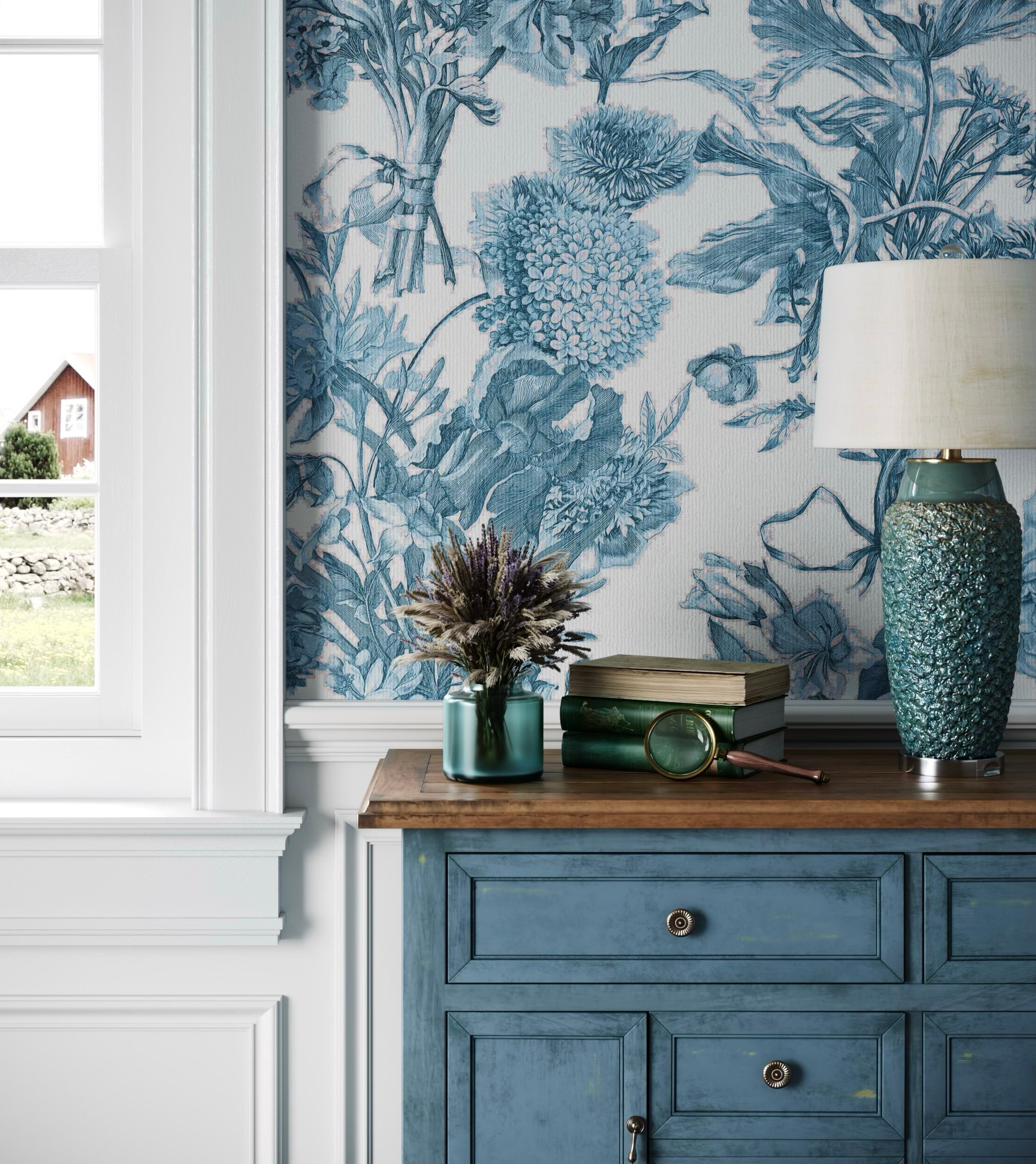
Slice suits interiors embracing retro revival or mid-century modern aesthetics. The bold pattern works in dining rooms, powder rooms, kitchens where period-appropriate styling extends beyond furniture into architectural finishes. Consider feature walls rather than full room application to prevent pattern fatigue. Pairs effectively with vintage or reproduction furniture from the 1960s-70s era alongside contemporary pieces appreciating that period's design language.
TECHNICAL SPECIFICATIONS:
- Width: 75cm per roll
- Length: 7 metres
- Pattern alignment: Straight match
- Repeat: Regular vertical repeat
- Installation: Butt joint
CARE: Wipe clean with damp cloth; bold colours and geometric pattern conceal minor surface marks.
BRING THIS HOME Where flowers become geometry, petals remember when nature submitted to colour blocks and compass precision.
Sisuverse Journal | Nest & Nurtured
-
Read more: Botanical Prints: From Pressed Specimens To Contemporary Wallpaper

Botanical Prints: From Pressed Specimens To Contemporary Wallpaper
Botanical illustration began as scientific documentation, artists translating three-dimensional plants into flat images serving both informational and aesthetic purposes. This exploration traces the journey from pressed herbarium specimens and watercolour expeditions to contemporary wallpaper, examining how printing techniques evolved from copperplate engraving through William Morris' screen printing to digital reproduction whilst maintaining essential character: beauty emerging from accuracy rather than imposed upon it.
Read more -
Read more: Woven Ground: The Cultural Geography of Handmade Rugs

Woven Ground: The Cultural Geography of Handmade Rugs
Handwoven rugs carry geography in their fibres. The wool came from specific mountains where specific plants fed specific sheep; the dyes derive from regional botanicals; the patterns preserve cultural memory encoded in visual language. From Persian workshop medallions to Berber mountain abstractions to Scandinavian restraint, each tradition represents centuries of accumulated knowledge, techniques refined through generations. This investigation explores how materials shaped by landscape, methods passed like recipes, and patterns carrying meaning beyond decoration create the ground beneath our feet.
Read more -
Read more: Setting the Table: European Christmas Traditions From Scandinavia to Sicily

Setting the Table: European Christmas Traditions From Scandinavia to Sicily
Geography shapes what we place on Christmas tables and how we place it. From Scandinavian candlelight to Mediterranean abundance, British formality to French patience explore European traditions that transform December gatherings into rituals worth inheriting, adapting, making yours.
Read more